Metal Castings: essential methods shaping the future of industrial production
Checking out the Flexibility and Applications of Metal Casting in Modern Market
Metal Casting are integral to countless markets, demonstrating their flexibility in applications varying from automotive elements to aerospace engineering. Numerous casting processes permit for the creation of complex layouts and durable components. As markets evolve, advancements and sustainable techniques are improving the landscape of Metal Casting. This change raises crucial questions concerning the future function of Metal Casting in manufacturing and style effectiveness. What advancements might redefine sector standards?
Introduction of Metal Casting Procedures
Although Metal Casting has actually advanced significantly for many years, its basic procedures remain vital in modern manufacturing. Metal Casting entails numerous crucial methods, including sand casting, financial investment casting, and die casting, each customized to details applications and materials. Sand casting, one of the earliest methods, makes use of sand molds to shape liquified steel, making it excellent for huge components. Investment spreading, understood for its precision, employs wax patterns covered with ceramic to attain intricate styles, typically utilized in aerospace and medical markets. Die casting, characterized by high pressure, allows the rapid manufacturing of complex forms with excellent surface area finishes, commonly used for automotive elements. Each process offers distinctive benefits regarding expense, product, and complexity compatibility, permitting manufacturers to pick one of the most ideal approach for their demands. Consequently, comprehending these processes is essential for enhancing production performance and attaining desired item requirements in a competitive market.
Key Industries Making Use Of Metal Casting
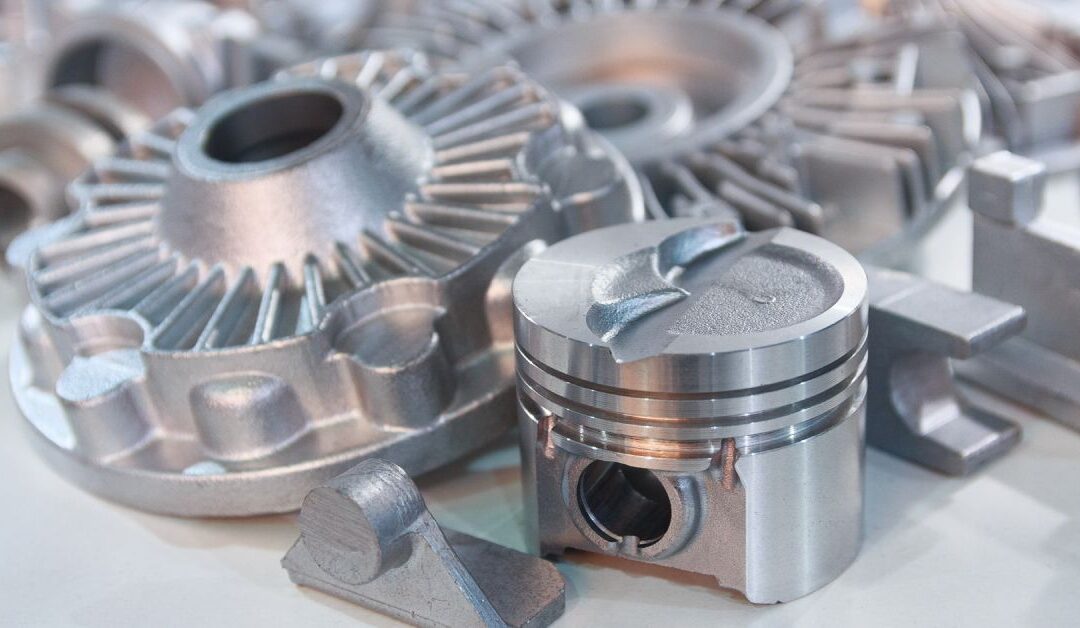
Metal Casting play an important function in different vital industries, driving advancement and performance. The automobile industry is just one of the biggest customers of Metal Casting, utilizing them for engine parts, transmission housings, and architectural parts. In aerospace, accuracy castings are crucial for aircraft engines and architectural components, making certain security and performance. The power industry likewise heavily depends on Metal Casting for wind turbine components in power generation, as well as for oil and gas applications where resilience is paramount. Additionally, the building industry employs Metal Casting for structural structures, fittings, and attractive components. Production equipment and equipment take advantage of castings, which offer robust and trustworthy components crucial for operation. Inevitably, the clinical area makes use of specialized castings for surgical instruments and implants, showcasing the versatility of Metal Casting across diverse applications. Each of these markets shows the value of Metal Casting ahead of time innovation and conference details practical requirements.
Advantages of Metal Casting in Production
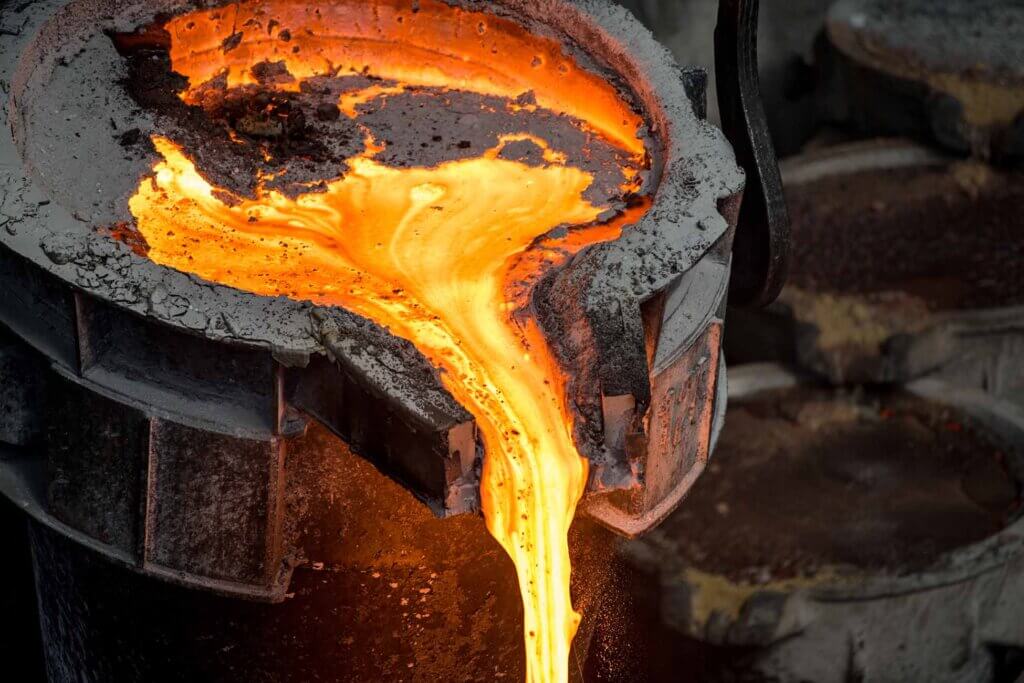
The benefits of Metal Casting in manufacturing are many, adding substantially to the performance and effectiveness of production procedures across different markets. One significant advantage is the capacity to develop complex forms that would be challenging or impossible to attain through various other producing techniques. This intricacy enables greater design versatility, enabling engineers to maximize parts for efficiency and functionality.
Additionally, Metal Casting can produce high-quality parts with excellent surface area finishes and dimensional accuracy, decreasing the requirement for substantial post-processing. Aluminum Castings. The procedure is also highly scalable, accommodating both large and tiny manufacturing runs without significant adjustments in tooling or setup
Metal Casting often result in less material waste compared to conventional machining methods, promoting even more sustainable manufacturing methods. Overall, the flexibility and efficiency of Metal Casting make them a recommended selection in industries such as auto, aerospace, and building and construction, enhancing efficiency and reducing prices.
Technologies in Metal Casting Technologies
As innovations in technology remain to improve the manufacturing landscape, innovations in Metal Casting are arising to enhance sustainability, efficiency, and precision. Recent advancements consist of the combination of computer-aided layout (CAD) and computer-aided production (WEB CAM) systems, which permit for detailed designs and decreased production times. Furthermore, 3D printing modern technology has actually revolutionized mold-making, making it possible for quick prototyping and personalization without the need for conventional tooling.
Moreover, using smart materials and sophisticated alloys is increasing the efficiency capabilities of cast products, causing lighter and more powerful components. Automation and robotics are additionally playing a considerable function, streamlining processes and reducing human mistake in manufacturing atmospheres. These technologies not only boost the quality of Metal Casting but additionally add to cost-effectiveness through decreased waste and much shorter lead times. As the market advances, these technical innovations assure to redefine the future of Metal Casting.
Sustainable Practices in Metal Casting
Lasting practices in Metal Casting are gaining prestige as manufacturers look for to reduce their ecological impact while preserving efficiency. Trick techniques consist of using recycled materials, which substantially lower basic material intake and power usage. By including scrap steel into the casting procedure, firms can decrease their carbon footprint and promote resource effectiveness.
Furthermore, advancements in energy-efficient modern technologies, such as electrical heaters and improved insulation, are being adopted to optimize power use during manufacturing. In addition, manufacturers are increasingly applying water preservation strategies to reduce waste and guarantee sustainable water management practices.
The adoption of environmentally pleasant spreading products, such as biodegradable binders, is on the surge, replacing conventional substances that may launch harmful exhausts. In general, the commitment to sustainability in Metal Casting not just addresses ecological problems yet also boosts the industry's competition and lasting feasibility in a quickly evolving market.
Situation Studies: Success Stories of Metal Castings
The effect of Metal Casting can be seen throughout different sectors, highlighting their convenience and effectiveness. In the automotive field, cutting-edge casting strategies have brought about lighter and much more fuel-efficient cars, while aerospace growths have led to advanced components that boost performance and security. In addition, the clinical area has actually benefited from accuracy castings that improve device functionality and patient end results.
Automotive Industry Innovations
Advancement in the vehicle market has actually been especially boosted by developments in Metal Casting see here techniques, which have actually permitted makers to produce lighter, extra resilient components. A leading automotive firm applied high-pressure die casting to develop engine blocks that are not just lighter yet also show remarkable thermal effectiveness. This shift substantially boosted fuel economy in their newest vehicle models. Another study highlights the usage of sand casting for creating complex transmission components, resulting in enhanced efficiency and integrity. In addition, the intro of 3D printing in Metal Casting processes has enabled the production of complicated geometries, promoting style adaptability and lowering waste. Collectively, these advancements display just how Metal Casting are improving the vehicle landscape, driving advancements in efficiency and sustainability.
Aerospace Part Advancement
Innovations in Metal Casting have actually also made significant strides in the aerospace field, where the need for high-strength and light-weight elements is important. Business have successfully used sophisticated casting strategies to generate parts such as wind turbine blades and architectural structures. A leading aerospace producer applied financial investment casting to create complicated forms that optimize performance while decreasing weight. This technique not just decreased manufacturing costs but additionally improved the resilience of the components. Another significant instance involved the usage of 3D printing combined with Metal Casting, allowing quick prototyping and faster turnaround times for new layouts. These success stories show the transformative effect of Metal Casting technologies, promoting technology and efficiency in aerospace production.
Clinical Gadget Applications
Metal Casting have actually become a crucial technology in the advancement of medical gadgets, giving solutions that boost both capability and client security. Study illustrate the successful assimilation of Metal Casting in various applications. As an example, orthopedic implants made through precision casting methods supply improved stamina and biocompatibility, significantly boosting patient end results. In one more circumstances, custom surgical tools are generated making use of Metal Casting, enabling tailored remedies that fulfill details step-by-step demands. Furthermore, the usage of lightweight steel alloys in analysis tools has actually caused boosted portability and ease of usage in scientific settings. These success stories underscore the critical duty of Metal Casting in progressing clinical modern technology, making certain gadgets are not just efficient however likewise secure for person treatment.
Future Patterns in Metal Casting Applications
The future of Metal Casting applications is poised for substantial improvement via the assimilation of additive production and smart production innovations. These innovations assure to boost effectiveness and precision in casting processes while resolving the expanding need for lasting techniques. As industries evolve, the fostering of cutting-edge techniques will likely redefine typical spreading techniques and add to an extra ecologically liable strategy.
Additive Production Integration
As sectors look for cutting-edge services to improve manufacturing effectiveness and reduce waste, the combination of additive production into Metal Casting procedures emerges as a transformative fad. This harmony enables the development of complex geometries that typical approaches struggle to attain. By using 3D printing techniques, makers can generate molds and cores with detailed layouts, significantly decreasing preparations and material consumption. Additionally, additive manufacturing assists in quick prototyping, enabling quicker versions and adjustments in layout. This advancement not just enhances production yet likewise encourages personalization, satisfying details client requirements. As this assimilation remains to evolve, it holds the potential to redefine Metal Casting applications, providing enhanced precision, decreased costs, and a much more lasting strategy to production in various industries.
Smart Manufacturing Technologies
Embracing clever production innovations notes a significant change in the future of Metal Casting applications. These improvements integrate automation, information analytics, and the Net of Points (IoT), enhancing production performance and top quality control. By making use of sensing units and real-time surveillance, producers can optimize processes, decrease waste, and forecast tools failings prior to they take place. In addition, smart innovations enable better customization of castings, enabling for extra intricate layouts and faster turnaround times. official source The adoption of artificial knowledge in quality control better enhances problem discovery, making certain higher item criteria. As these modern technologies advance, they will not just improve procedures however also foster innovation in Metal Casting, placing business to fulfill the demands of a rapidly transforming commercial landscape.
Sustainable Casting Practices
Although traditional Metal Casting techniques have long been important to manufacturing, a growing focus on sustainability is reshaping techniques within the industry. Modern factories are progressively taking on environmentally friendly products and procedures, such as using recycled steels, which significantly reduces the environmental impact. Additionally, innovations in technology make it possible for much more reliable power use, lessening waste and discharges throughout manufacturing. The consolidation of additive you could look here manufacturing methods additionally boosts sustainability by reducing material waste and enabling complicated layouts that were previously unattainable. In addition, industry stakeholders are focusing on life process evaluations to examine the ecological impact of Metal Casting. As the demand for greener options escalates, sustainable casting practices are poised to come to be a standard in Metal Casting, fostering a more accountable and ingenious production landscape.
Regularly Asked Inquiries
What Materials Are Frequently Utilized in Metal Casting?
Common materials used in Metal Casting consist of aluminum, iron, bronze, magnesium, and steel. Each material offers distinctive homes, making them appropriate for various applications, from automobile parts to complex imaginative styles in making processes.
How Does Metal Casting Compare to Machining Processes?
Metal Casting typically uses better style flexibility and can generate complicated shapes much more successfully than machining. Machining provides greater precision and finer surface coatings, making each procedure appropriate for various applications in production.
What Are the Normal Prices Linked With Metal Casting?
Common prices related to Metal Casting vary based on variables like product, volume, and intricacy. First arrangement can be high, however huge production runs significantly minimize per-unit expenses, making it financially feasible for numerous applications.
How much time Does the Metal Casting Refine Take?
The Metal Casting procedure commonly takes anywhere from a few hours to numerous weeks, relying on elements such as the complexity of the layout, the product used, and the dimension of the cast object.
What Safety And Security Measures Are Needed in Metal Casting Facilities?
Metal Casting centers call for precaution such as appropriate air flow, protective equipment, emergency devices, and normal training. In addition, keeping equipment and adhering to safety methods guarantees a much safer working setting for all personnel associated with the process.
Metal Casting involves a number of crucial approaches, consisting of sand spreading, investment casting, and die spreading, each customized to details applications and products. Eventually, the clinical area makes use of specialized spreadings for medical tools and implants, showcasing the adaptability of Metal Casting throughout diverse applications. As advancements in modern technology continue to reshape the manufacturing landscape, advancements in Metal Casting are arising to boost precision, sustainability, and effectiveness. As markets look for cutting-edge options to improve manufacturing performance and lower waste, the assimilation of additive manufacturing right into Metal Casting procedures emerges as a transformative trend. Embracing smart manufacturing technologies marks a significant change in the future of Metal Casting applications.